Sunday, 17 April 2016

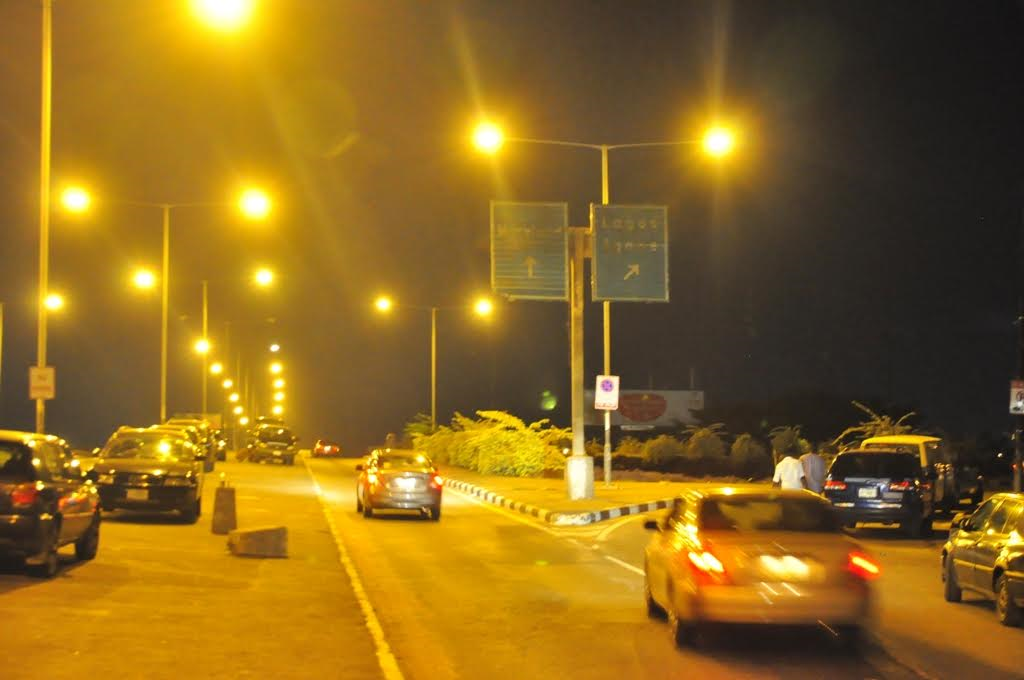
Photos: Lagos State Gov 'Light up Lagos project' in progress...part 10


The Light Up Lagos Project has been extended to the Muritala Muhammed International Airport Road inward Seven and Eight Bus Stop. The route which had hitherto posed great risk for drivers at night due to the darkness has become well illuminated, thereby increasing motorists vision during the night.
The project, the 10th in the series also covers the Muritala Muhammed Airport (local wing) stretch to the Lagos Abeokuta Expressway to Ile-Epo down to Ekoro Road has also been lit up as the project continues to spread across the length and breadth of the state.

The President As Chief Diplomat By Reuben Abati


I read an interesting article recently in which the author, objecting to President Muhammadu Buhari’s frequent travels abroad pointed out that Presidential spokespersons since 1999, including this writer, have always justified such trips using essentially the same arguments. The fellow quoted copiously and derisively from my State House press statements and an article by me titled “The Gains of Jonathan’s Diplomacy”. 

Those who object to Presidential travels abroad do so for a number of reasons: (a) the cost on the grounds of frequency and size of estacode-collecting delegation, with multiple officers performing the same function tagging along on every trip,  (b) the need to make better use of diplomats in foreign missions and Foreign Ministry officials who can act in delegated capacity; (c) the failure to see the immediate and long-term gains of Presidential junket, thus creating the impression of a jamboree or mindless tourism, and (d) the conviction that the President needs to stay at home to address urgent domestic challenges, rather than live out of a suitcase, in the air. While these reasons may seem understandable, arising as they are from anxieties about reducing wastage and increasing governmental efficiency for the people’s benefit, I still insist that Presidential trips are important, and that by travelling abroad, the President is performing a perfectly normal function.
 
We may however, complain about abuses and the reduction of an important function to tourism for after all, in eight years, President Bill Clinton of the United States travelled only 54 times – only by Nigerian standards, but we must also admit that the President is the country’s chief diplomat. In our constitutional democracy, he is the main articulator and implementer of the country’s foreign policy. He appoints ambassadors who function in their various posts as his representatives. He also receives other country’s ambassadors. Emissaries from other countries or multilateral organizations consider their visits incomplete without an audience with the President, and it is his message that they take back home.
 
He visits other Presidents and he also gets visited by other world leaders; an interaction that provides him an opportunity to give effect to Section 19 of the 1999 Constitution which defines the objectives of Nigeria’s Foreign Policy. In doing this, he is expected to strengthen relationships with other countries, at government to government and people to people levels in the national interest.
 
The President is also the country’s chief spokesperson, and that is why what he says, or what he does when he is negotiating within the international arena on Nigeria’s behalf is of great consequence, and this is particularly why on at least two occasions recently, Nigerians were inconsolably upset when their President chose a foreign stage to put down his own country, and people. This clarification of the role of the President as the country’s chief diplomat may sound didactic, and I apologise if it comes across as pedantic, but this is necessary for the benefit of those who may be tempted to assume that the job of a President is to sit in one place at home and act as a mechanic and ambulance chaser. The concerns that have been expressed however point to something far more complex, and I seek to now problematize aspects of it.
 
One of the concerns often expressed is that the trips that have been made by our Presidents since 1999 look too much alike. It is as if every President that shows up, embarks on exactly the same junket to the same locations, for the same reasons: foreign direct investment, agriculture, security, co-operation etc. etc. accompanied by a large retinue that includes many of the same officials who travelled with the former President and had prepared the same MOUs that will be signed again, with the new spokespersons telling us the same story all over again.  
 
Nigerians are therefore not impressed with the seeming conversion of the country’s foreign policy process into a money-guzzling ritual. This, I think, is the crux of the matter. Whereas our foreign policy objective talks about national interest, what constitutes that national interest has been blurry and chameleonic in the last 55 years and more so since the return to civilian rule in 1999.  National interest has been replaced majorly by personal interest and it is the worst tragedy that can befall a country’s foreign policy process. We run a begin-again foreign relations framework because every new President wants to make his own mark. The second point is that he is compelled to do so because in any case, we do not have a strong institution to follow up on existing agreements. The international community knows this quite well, and more serious nations being more strategic and determined in the pursuit of their own interests will bombard a new Nigerian President with invitations to visit. They also know that a new President in Nigeria is likely to cancel or suspend existing agreements or contracts being executed by their nationals. The uncertainty that prevails in Nigeria is so well known, such that the gains recorded by one administration are not necessarily institutionalized. 
 
We may have thus reduced foreign policy to individual heroism, which is sad, but institutions and human capital within this arena are critical. The Ministry of Foreign Affairs, once a glorious institution is a shadow of its old self. The politicization of that Ministry has done great damage. When a President visits a country, and enters into agreements that result in Memoranda of Understanding, it is expected that there will be follow up action to be taken by officials either through Bilateral Commissions (where they exist between Nigeria and the respective country) or the issuance of instruments of ratification, leading to due implementation. Nigeria signs all kinds of documents but so many details and agreements are left unattended to. There is too much politics in the Ministry of Foreign Affairs, and too much rivalry between career foreign affairs personnel and the politicians who do not allow them to function as professionals. This has to stop, otherwise every new President has to start again and embark on trips that should have been taken care of at the level of bilateral commissions or the ministry.
 
Career foreign affairs personnel are critical to the shaping of foreign policy. They are the agents through which states communicate with each other, negotiate, and sustain relationships. The only thing they complain about in that Ministry is lack of money. It is the same with the Missions abroad. Give them money, but there is always a greater need for professionalism, which makes the diplomats of Nigeria’s golden era so sad. The foreign policy process also works better when there is Inter-Ministerial and Intra-governmental collaboration. The tendency in Nigeria is for every department of government to operate as an independent foreign policy unit. Government officials get invited to functions by foreign embassies, without clearance from the Ministry of Foreign Affairs, and they just troop there to eat free food, but they never keep their mouths shut.  Nigerian officials are probably the most talkative in the world and with foreigners, they will offer their mother’s life history to make them appear important. That is not how to run foreign relations. There must be control, co-ordination, discipline, clarity and sanctions.
 
Every world leader wants to meet the Nigerian President. Nigeria is a strategic market and a very cheap one too, a source of raw materials and a dumping ground for finished products, with a consumptive population. Our balance sheet in all our relationships is unbalanced even in Africa, which we once described as the centerpiece of our foreign policy. We have toyed with many slogans: dynamic diplomacy, economic diplomacy, concentric circles of medium powers, citizen diplomacy, transformational diplomacy, what else/- the Buharideens are yet to come up with their own, but you wait, they will soon come up with something- really, the truth is that Nigeria’s foreign policy process is not strategic or competitive enough.
 
Within Africa, it is driven by too much kindness rather than enlightened self-interest, or deliberate search for sustainable advantages. A Donatus mentality has seen Nigeria over the years looking out for its African neighbours, donating money, supporting their causes, but Nigeria has gained little from this charity-driven diplomacy. Many of the countries we have helped to build openly despise us at international meetings, they struggle for positions with Nigeria, they humiliate our citizens in diaspora, and when they return later to beg for vehicles, or money to pay their civil servants or run elections, we still oblige them. The attempt in recent years to review all of this, and be more strategic should be sustained.
 
We must wield the carrot and the stick more often. American Presidents don’t just visit other countries, they make statements and often alter the course of history with their mere presence as Kennedy did with his visit to Berlin in 1963, Nixon in China in 1972, Jimmy Carter going to Iran in 1977, George Bush, visiting Mexico in 2001, and Obama in Cuba in 2016. In the international arena, we give the impression that we are ready to jump at any and every invitation in order to be seen to be friendly, but we tend to overdo this.  Foreign Affairs Ministry officials who want to be seen to be doing something will always try to convince the President to embark on all trips. The dream of every Ambassador on foreign posting is also to have his President visit, even if once during his or her tenure. The resident Ambassador is happy, the Foreign Affairs folks get quality eye-time with the President but the hosts look at us and wonder what is wrong with our country signing the same agreements with the emergence of every President and not being able to act.  
 
It does not help either that with every new President, we talk about reviewing Nigeria’s Foreign Policy. We are probably the only country in the world that is always reviewing Foreign Policy and informing the whole world. That should be the routine work of the Ministry of Foreign Affairs and the Nigeria Institute of International Affairs, with inputs from the Nigerian Institute of Policy and Strategic Studies (NIPSS), the Nigeria Intelligence Agency (NIA), and the Presidential Advisory Committee on Foreign Affairs.
 
We must never lose sight of a necessary linkage between domestic policy and foreign policy. What exactly is in it for the average Nigerian, for the Nigerian economy and for Nigeria? Do we have the capacity to maximize gains from foreign interactions?  Always, the real challenge lies in getting our acts together and tying up the loose ends in terms of sustainable policy choices, infrastructure, culture, leadership, and strategic engagement. 

New music: Naira – Veto Power


Samuel Oluwafemi also known as ‘Naira’ is a Nigerian songwriter and singer who’s signed onto CM Records. The multi-talented act releases brand new music christened ‘Veto Power’ – a conscious music which preaches patience and discusses about the current state of Nigerians.

Listen to Naira’s new offering and tell us what you think. ENJOY!  
Listen To ‘Veto Power’ On MyNotJustOK
Download ‘Veto Power’ On MyNotJustOK
https://my.notjustok.com/track/download/id/85205

Grazing Commission Bill: When Men Die That Cattle May Live! By Reno Omokri


Nigeria is not the only country where nomadic pastoralists herdsmen come and go. In Kenya, they have the Maasai herdsmen who have been herding cattle around the Nile Valley area from the days of Joseph in ancient Egypt. Other nations have their own form of pastoralists too. But never in the history of the 20th and 21st Century has the world encountered a scenario such as that which stares Nigeria in the face, whereby Fulani pastoral Herdsmen simultaneously and nationally and almost systematically are wiping out indigenous Nigerians for the benefit of their cattle.

I challenge my readers to take the time to do a Google search and collate the number of reported casualties from unprovoked Fulani attacks on innocent, unarmed Nigerians in 2016 alone. The results will shock you! I will not throw out a number in order not to give my political foes fodder to use against me in a case of incitement, but please carry out even a cursory research on the matter.

And what has been the response of the Nigerian Government? I was shocked to read the reaction of Nigeria's minister of Internal Affairs, retired Lt. General Abdulrahman Dambazau, who blamed Social Media users for exacerbating these attacks!

I mean really? So what are we to do when we become aware that Fulani herdsmen are accused of killing, raping and maiming Nigerians? Are we to keep quiet in the national interest? Excuse me, but I thought the national interest was the interests of human beings rather than the interest of cattle!
And then President Muhammadu Buhari from faraway China, rightly goes ahead to issue a lethal warning to pipeline vandals: desist from your actions or else be dealt with as I dealt with Boko Haram!
Yet this same tough talking President does not have similar words for Fulani herdsmen? Mr. President, how many Nigerians have to die before you give Fulani herdsmen the 'Boko Haram' treatment?

President Muhammadu Buhari must be willing to suspend the fact that he is himself a Fulani by ethnicity and remember what he has been preaching to us since he first forced his way into our national consciousness after his coup against President Shagari in 1983.

I can never forget when the then military head of state, Major General Muhammad Buhari said "This generation of Nigerians and indeed the future generation have no country other than Nigeria, we shall stay and salvage it together."
Indeed, the President must remember that he wanted us to stay and salvage Nigeria together and not stay and be savaged in Nigeria by Fulani herdsmen!
And the absolute worst part of this story is the attempt by some Legislators to add salt to injury and injustice by floating a so called National Grazing Commission Bill to compulsorily acquire large swathes of Nigerian land and give them to the Commission for the benefit of Fulani herdsmen!

In fact, it makes better sense to establish a Victim Support Commission for the many thousands of victims of Fulani herdsmen than it does to set up a National Grazing Commission!

Honestly, I do not understand the idea behind this Bill. The legislators sponsoring this Bill are asking Nigeria to change her land tenure system to fit nomads who may or may not be Nigerian citizens. Has the world gone mad???

Nigeria should not change to fit Fulani herdsmen, instead it is Fulani herdsmen that should change to fit Nigeria!
The Grazing Commission Bill is an insult to all the victims of the herdsmen. Peace can only be achieved if those who want to herd cattle set up ranches as is done everywhere else in the world!

The cattle herding business is a private enterprise. It should not be the business of the government to use public land and public funds to promote the group interest of Fulani herdsmen.

Let me assure any federal legislator that is foolhardy enough to support this Bill that Senators and Representatives from states where Fulani herdsmen have killed innocent Nigerians should forget their reelection if they support the Grazing Commission Bill!
In fact, they should be ashamed of themselves that they sat in a National Assembly where the Lagos-Calabar rail was not provided for and watched as the #GrazingCommissionBill got to second reading!

Instead of passing laws to protect victims of genocide they want to pass laws to protect those who commit genocide! Talk about Stockholm syndrome!
I am tempted to ask if this the Federal Republic of Nigeria or the Federal Republic of Fulani Herdsmen with Nigerians as second class citizens? Hardworking, tax paying Nigerian citizens do not have land to build houses yet the backers of this repugnant Bill want to give free land to Fulani herdsmen?

But should I or anybody reading this really blame the sponsors of this Bill? Shouldn't the blame rightly be on all of us collectively when we keep silent while our brothers die because of political ambition and fear of persecution!
What did Jesus say again in Matthew 10:28 "And fear not them which kill the body, but are not able to kill the soul: but rather fear Him which is able to destroy both soul and body in hell."


My name is Reno Omokri, if anybody likes let them come and arrest me for saying the truth. I would rather live the rest of my life in a dungeon than fold my hands and do nothing while my fellow Nigerians are being killed so that cattle may live!


Reno Omokri is the host of Transformation With Reno Omokri, founder of the Mind of Christ Christian Center in California and author of Shunpiking: No Shortcuts to God and Why Jesus Wept

Couple face 3 month jail term for losing library books


A judge warned a Michigan couple they face three months in jail after they failed to return two overdue library books. The couple, Cathy and Melvin Duren borrowed one  Dr Seuss book for their teenage son to read to their granddaughter back in July 2014 and in April 2015 they borrowed Rome Prophecy from Tecumseh Public Library which they didn't return for 8 months. They incurred late fees up to $35 WXYZ reports.

The Durens said they received a letter in December 2015 asking them to pay the fees and return the books or pay the costs of the books to replace them if they couldn't find them, the letter also warned them that they could be charged and taken to court if they didn't pay the fees.
 
Fortunately, they were able to find the The Rome Prophecy which they returned but when they couldn't find the Dr. Seuss book, Cathy Duren sent a $55 money order to the prosecutor's office to cover the late fees and replacement costs for the lost book.
But they refused to pay the $210 Lenawee County Economic Crimes Unit diversion fee which they claim is extortionate.


However, their refusal to pay the fee landed both in court and they face up to 93 days in jail and a maximum $500 fine for failing to return the books.
'I can't image going to jail over it, but I certainly will fight these charges because I'm not guilty,' Cathy Duren said
She said that the experience had left her so angry, she would never return to Tecumseh Public Library or any other library for that matter.

The Durens paid $100 bond to avoid going to jail last Friday when they were served with arrest warrants.

Corper happy to complete her NYSC :-)


 As she shared on FB! Congratulation..

Five men arrested for kidnapping and killing Youth Corps member after collecting N1.5m ransom

The Rivers state Department of State Security, DSS, arrested five suspects allegedly behind the abduction and murder of a National Youth Service Corps (NYSC) member, Mr Sampson Worlu even after they collected N1.5m ransom for his release.

The five suspects are facing charges at a magistrate court in Port Harcourt for his abduction and death.

According to Vanguard, after the men collected the N1.5m, they reportedly disappeared and the victim's family members couldn't locate them. Fortunately, men of the DSS were able to track them all down and arrest them.

Charles Worlu, a brother of the deceased hostage, said all the family want is justice. 
 
He said the kidnappers asked the family for ransom two times. He said they first asked for one million naira and then asked for another five hundred thousand naira which they paid to them for the release of their brother, but the men still killed him.

Worlu was serving in Imo State before his abduction at Rumuokoro roundabout in Obio Akpor local government area of Rivers State.


Source: Vanguard